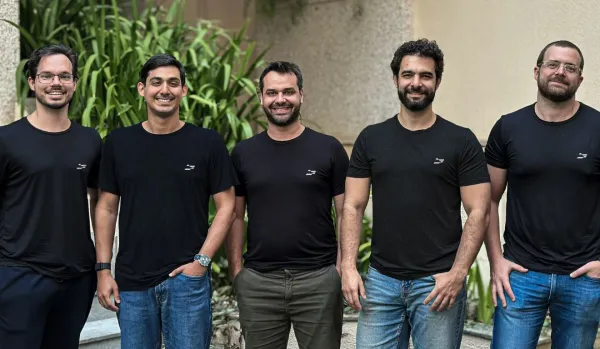
Xflow simplifies cross-border payments for Indian businesses
Xflow streamlines cross-border payments for Indian businesses, offering seamless international transactions with improved FX outcomes. As a curated FinTech of My Choice, Xflow bridges the gap between complex regulations and efficient financial operations.


If you have ever tried to design an onramp or offramp into India, you know the feeling. It is complex, expensive, and full of rules that make perfect sense only after your third call with a bank.
Fintech of my choice: Xflow
UPI proved something important. When the rails are good, payments stop being “a finance problem” and become a basic utility. But the moment Indian businesses need to collect money from abroad, it suddenly feels like going back ten years.
Xflow is building the missing cross-border layer for India. Founded in 2021, it helps Indian businesses collect international payments, hold receiving accounts in USD, EUR, or GBP, and then convert to INR with better FX outcomes and cleaner workflows.
The numbers are already serious. Xflow says it serves around 15,000 businesses, including SaaS companies, global capability centres, and exporters. It processed nearly $1 billion in annualized payment volume last year, with ten-fold year-over-year growth. They also raised a $16.6 million Series A led by General Catalyst, with Square Peg, Stripe, Lightspeed, Moore Capital, and PayPal Ventures, at an $85 million valuation.
What I like here is the founder-market fit. Anand Balaji, Ashwin Bhatnagar, and Abhijit Chandrasekaran came from Stripe. They saw firsthand how fast domestic payments can move, and how painfully slow cross-border B2B still is, especially when you add Indian compliance and bank processes into the mix.
The product detail that made me pause is their “AI-driven FX analyst” that claims to deliver an extra 8 to 10 paise per dollar on conversion. On paper that sounds small. In real businesses, at real volumes, that is margin. And margin is the difference between a “nice dashboard” and something finance teams will fight to keep.
The other moat is regulatory execution. Xflow has final RBI licences for import and export payments. In India, distribution and UI matter, but licences and trust are what keep you alive when volumes start to scale.
I also keep thinking about the bigger pattern. Every country is building its own fast domestic rails, but cross-border still runs on slow, opaque plumbing. India has one of the largest diaspora communities in the world, and Indian companies sell globally by default now. The gap between “instant at home” and “painful abroad” is exactly where infrastructure companies get built.
Every day FinBox Solutions highlights one hand picked fintech on the FinBox page, and the project with the most votes becomes Fintech of the Week.
Follow FinBox Solutions if you want more real fintech stories like this.
Personally, I want Xflow to win because this is the kind of boring, essential infrastructure that makes founders sleep better. Next time I look at an India-Europe corridor, this is the type of product I hope is already in the stack.
What is the biggest thing still stopping cross-border payments from feeling as instant and transparent as UPI, regulation, bank incentives, or product execution?
#fintech #FinBoxSolutions #Xflow #payments #crossborder #India #B2Bpayments #FX #treasury #SaaS #exporters #UPI